


Repudiating His Moral Order

Updated: Sep 14
2 Samuel 21:1 records:
“And there was a famine in the days of David for 3 years, year after year; and David sought the presence of Yahweh. And Yahweh said, ‘It is for Saul and his bloody house, because he put the Gibeonites to death.’”
Nearly 400 years had passed between Joshua’s covenant with the Gibeonites and God’s judgment in 2 Samuel 21. Israel’s central failure occurred before the oath, when Joshua and the leaders examined the Gibeonites’ staged ruse - the worn-out garments, patched wineskins, old shoes, and moldy bread - but “asked not counsel at the mouth of the LORD,” as it says in Joshua 9:14.
Once Israel’s leaders had sworn by the LORD, however, the Gibeonites’ deception did not release the Nation from its obligation.
What is striking is that David apparently did not become alarmed after the first year, or even the second. Only when the famine continued into a third year did he inquire of the LORD. While he did not automatically assign a spiritual cause to every hardship, he neither ignored the hand of Providence when a persistent pattern could no longer be dismissed as ordinary adversity.
Proverbs 11:9 provides a clue: “Through knowledge shall the just be delivered.” Jewish Hebrew scholar Michael V. Fox explains that the righteous ordinarily escape trouble through wisdom. But after 3 years - “year after year” - David discerned that ordinary wisdom was insufficient and sought the LORD.
By then, centuries had passed since the Gibeonite deception, yet God had neither forgotten the covenant nor dismissed its violation. Time had not canceled the oath, political expediency had not superseded it, and patriotic zeal could not sanctify covenant-breaking.
Which brings us to Os Guinness and his classic A Free People’s Suicide, in which he places America’s crisis of character in historical perspective: constitutions and laws may establish the framework of liberty, but only faith, virtue, and self-restraint can preserve it. As Guinness writes, “If the hundred-centuries clock of civilization is compressed to a single hour, today’s interest in freedom and democracy appears only in the last minute or so before midnight, so to take it as the norm is folly.”
He then delivers this sobering verdict: “The plain fact is that no free and lasting civilization anywhere in history has so far been built on atheist foundations.”
After her dalliance with godless secularism, America has reached a fork in the road: the American Revolution of 1776, rooted in ordered liberty under God, or the French Revolution of 1789, which replaced God’s authority with autonomous human reason and State coercion.
America has become a radically secularized society in which truth is increasingly subjective, and where the U.S. Supreme Court has led the way by sanctioning murder of unborn babies, prohibiting school-sponsored prayer and devotional Bible reading, redefining marriage, and extending protections based on sexual orientation and gender identity, with even biological sex now being subordinated to social theory.
Our Nation seems determined to ignore Guinness’ dire warning that we are approaching “the last minute or so before midnight.”
Rev. Dr. Joseph Boot, Founder and President of the Ezra Institute, identifies the spiritual reality that Western civilization cannot discard its Biblical foundation while expecting the structure to stand. As Biblical faith retreats, godless secularism fills the vacuum. The individual becomes sovereign, political ideology supplies the creed, and the State imposes the new orthodoxy.
Boot describes the result as the “divinization of the State”- a State that makes itself god and dictates who lives and who dies without reference to Jehovah or fear of Him. Truth becomes whatever the State declares, morality whatever the courts legitimize, and justice whatever those possessing political power are prepared to enforce.
Against this backdrop, 17th-century America’s covenantal language cannot be dismissed as incidental. The Mayflower Compact of 1620 declared that the Pilgrims came “for the Glory of God, and Advancement of the Christian Faith” and covenanted together to form a civil body politic. Connecticut’s Fundamental Orders, adopted in 1639, sought to “maintain and preserve the liberty and purity of the Gospel of our Lord Jesus.”
John Winthrop, founding governor of Massachusetts Bay, interpreted the colonial undertaking through Biblical covenant theology. In Winthrop’s famous 1630 sermon A Model of Christian Charity, obedience would bring blessing, while unfaithfulness would make the settlers “a story and a by-word through the world.” His ‘city upon a hill’ joined public accountability and ordered liberty under God.
The 18th-century Founders retained this framework in broader language. The Declaration appeals to “Nature’s God,” rights endowed by the “Creator,” the “Supreme Judge of the world,” and “the protection of divine Providence.” They acknowledged God as Creator, moral Judge, Governor of history, and the source of unalienable rights.
The Nation’s contemporary famine has not yet become a scarcity of bread, but it is already a famine of honesty, moral clarity, Biblical wisdom, and fidelity to truth within the institutions that shape and govern America. Courts redefine rather than uphold moral order; schools transmit ideology rather than truth; government substitutes official narratives for accountability; media advance preferred conclusions rather than facts; and churches too often accommodate the culture rather than confront it with God’s Word.
The question before American Christendom is not whether Providence is speaking. A people cannot invoke God’s name and receive His blessings while repudiating His moral order, and presume that Heaven will remain forever silent. Nor can the passage of centuries erase an account that God still intends to settle.
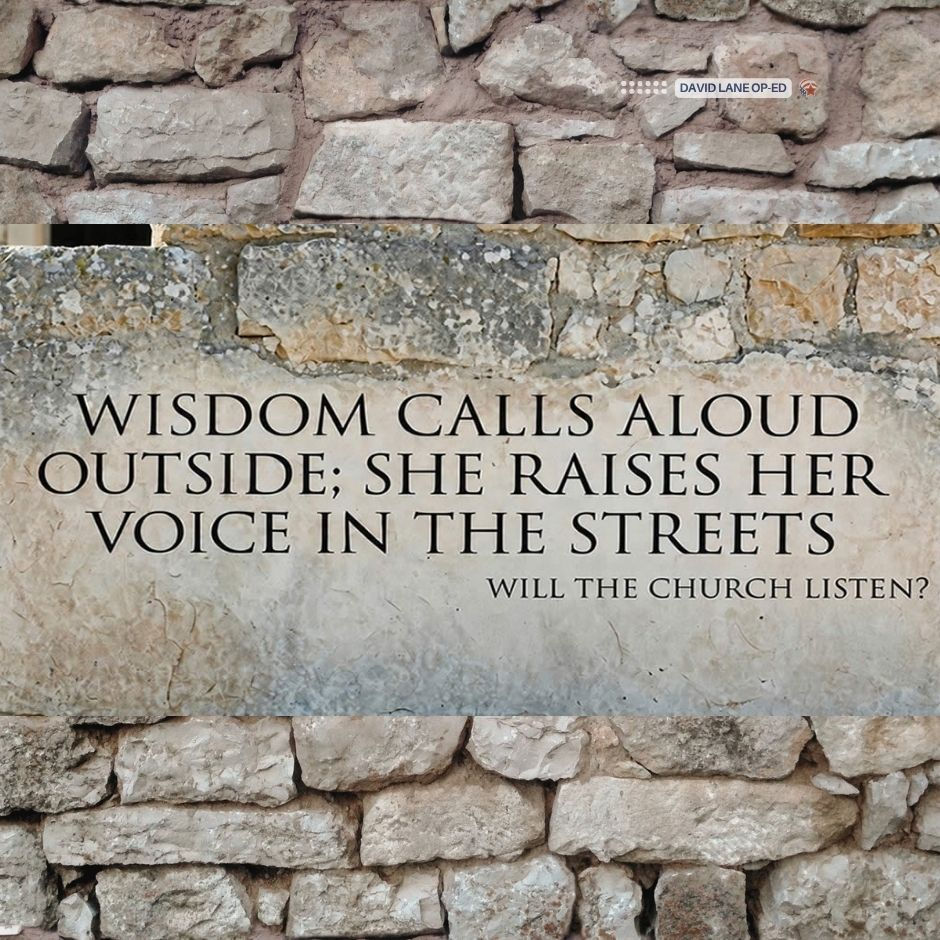
The question is whether the Church will do as David did and inquire of the LORD, or simply wait through a fourth year and a fifth, assuring itself that ordinary adversity requires no spiritual accounting.
The hour is late, but it is not yet midnight.
Thankfully, Gideons and Rahabs have begun to rise.
The answer will come from neither Washington nor Wall Street; it must begin in the House of God.
David Lane
American Renewal Project


Comments